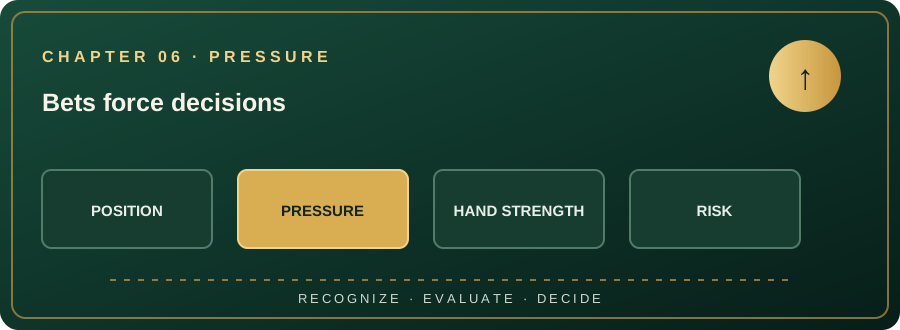
The challenge
Pressure in poker comes from the decisions opponents force you to make. A bet asks you to risk chips or surrender the pot. A raise increases that demand. The pressure can be strategic, emotional, or both: a large wager may make a decision uncomfortable even when the correct response is straightforward.
Look beyond the obvious
Pressure is not always evidence of strength. Some players bet for value, some bluff, and some use a sizing that serves several purposes. Your task is to interpret the action in context: the board, the betting history, the opponent, the pot, and the remaining stacks.
A more disciplined approach
Players struggle when they react automatically. One person folds whenever faced with aggression; another calls because folding feels weak. Both allow the opponent’s action to dictate the response without first evaluating the situation.
Put the idea into practice
Before responding to a bet, take a breath and describe what the bet changes. How much does it cost to continue? What hands might take this line? What options remain if you call or raise?
Identify the obstacle, evaluate the situation with the information available, and choose a deliberate response rather than reacting automatically.
Watch Video 6: Why Pressure Is an Obstacle
If the video does not load, watch Video 6 on YouTube.
Ready for the complete book?
This online edition introduces the framework and selected ideas. The complete book develops the concepts in greater depth.
Buy the Complete Book on Amazon